Winter is one of the most underrated times to visit the Sahara. The skies are clear, the light is soft, the dunes are quiet outside the holidays, and you can walk around at midday without searching for shade. But there is one thing that surprises nearly every visitor: how cold the desert gets after dark.
This guide explains what Merzouga in winter is really like — temperatures, clothing, camp choice, daylight hours and the holiday rush — so you can enjoy the Erg Chebbi dunes from December to February in comfort.
What is the weather like in Merzouga in winter?
Merzouga in winter means warm, sunny days and cold nights. Typical approximate conditions from December to February:
| Month | Average daytime high (approx.) | Average night low (approx.) | Daylight (approx.) |
|---|---|---|---|
| December | 17–20°C | 2–5°C | about 10 h |
| January | 16–19°C | 1–4°C | about 10 h |
| February | 19–22°C | 4–7°C | about 11 h |
These are averages; on clear, still nights the temperature on the open dunes can drop to around 0°C or slightly below, while some days reach the mid-20s. Rain is rare. Occasional windy days can lift sand, and on the road from Marrakech the High Atlas pass of Tizi n'Tichka (about 2,260 m) can see snow, which may briefly slow traffic.

Why visit Merzouga in winter?
- Comfortable daytime temperatures for walking the dunes, sandboarding and visiting villages.
- Crystal-clear skies and sharp light for photography.
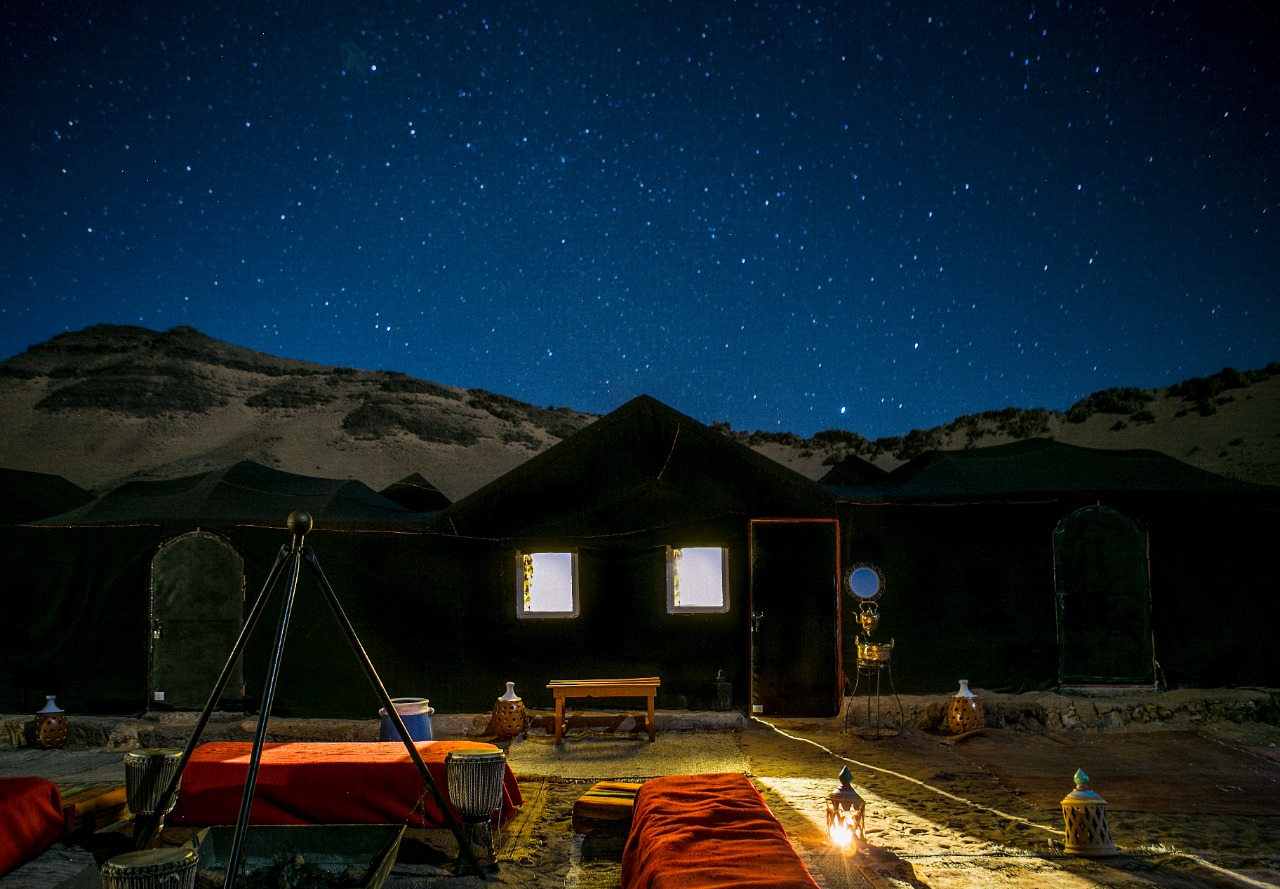
- Long, crisp nights excellent for stargazing — Orion and the Pleiades are high overhead.
- Fewer visitors in January and early February compared with spring.
- Combining the desert with snowy Atlas scenery on the same trip.
What to wear in the desert in winter
Think in layers: you will go from T-shirt weather at noon to near-freezing at night. A practical winter list:
- Warm down or synthetic jacket (the single most important item).
- Fleece or wool mid-layer.
- Thermal base layer and warm socks for sleeping.
- Woolly hat and gloves for evenings and sunrise.
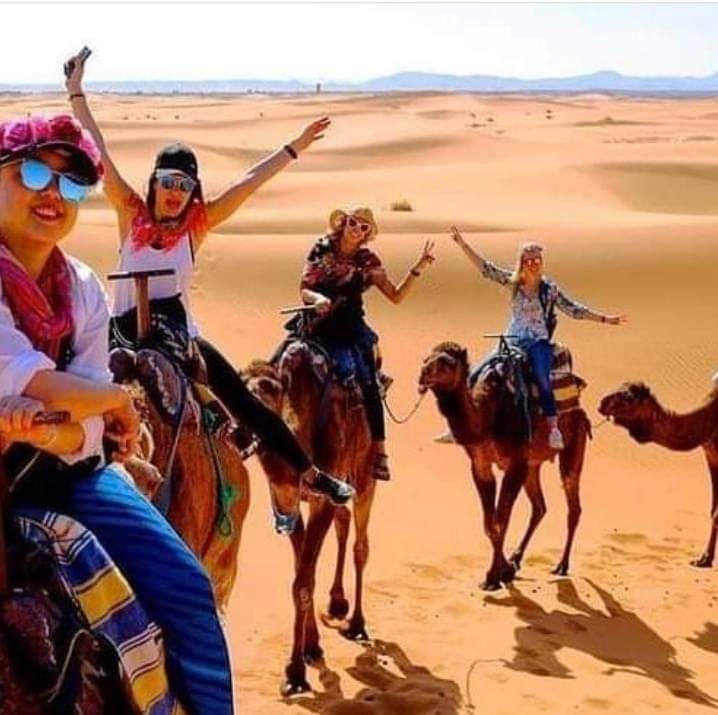
- Long trousers for the camel ride.
- Scarf for wind and sand; sunglasses and sunscreen for the daytime glare.
If you pack only one extra item for winter, make it a warm jacket you can wear over everything else. Desert camps are generous with blankets, but sitting around the fire or climbing a dune before sunrise is when you will really feel the cold.
Which desert camp is best in winter?
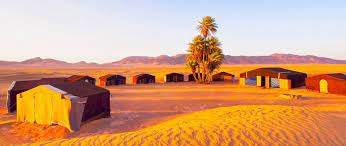
In winter, the camp choice matters more than at any other time of year. Standard camps provide thick blankets, but tents are not heated and bathrooms are shared — walking outside to a cold toilet block at 2 am is not everyone's idea of fun. Luxury camps usually offer a private bathroom with hot shower and often some form of heating. If you feel the cold, an upgrade is well worth considering; our luxury vs standard camp comparison explains the differences in detail.
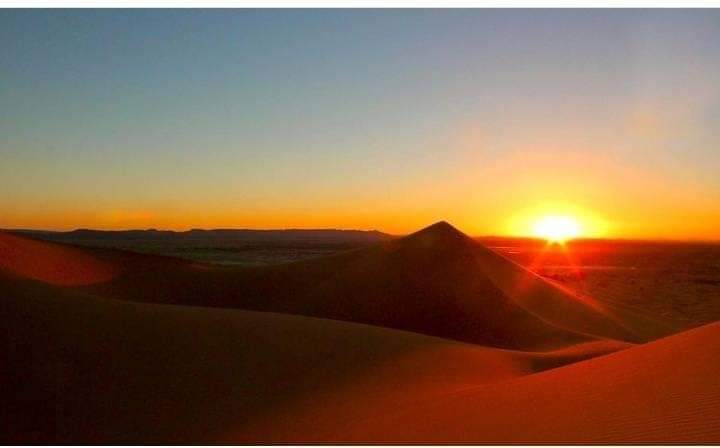
How to plan a winter day in the dunes
- Arrive in Merzouga by about 4 pm — winter sunset is early, roughly 5:30–6:15 pm depending on the month.
- Change into warm layers before the camel ride; the temperature drops quickly once the sun touches the horizon.
- Enjoy dinner and the fire, then stargaze well wrapped up.
- Sleep with your next day's clothes inside the blankets so they are warm in the morning.
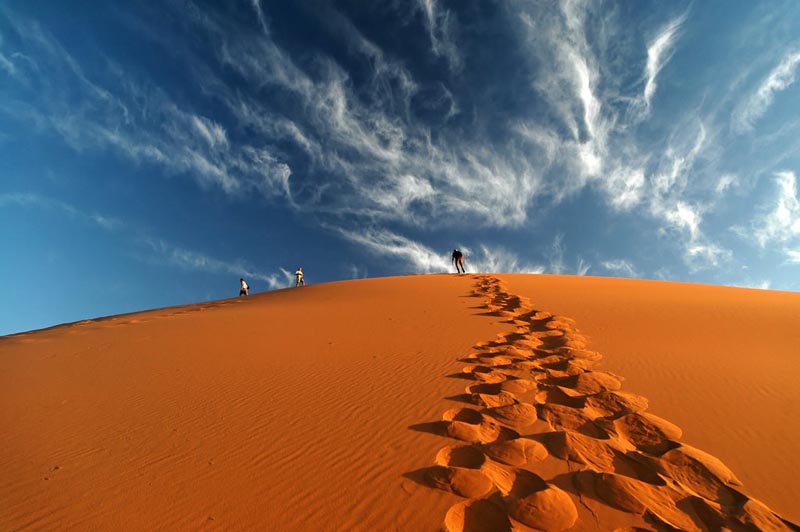
- Climb a dune for sunrise (around 7–7:30 am) with hat and gloves on.
- Spend the warm midday hours exploring Khamlia, Rissani or the area around the erg.
Winter activities around Merzouga
The comfortable midday temperatures make winter ideal for exploring beyond the dunes. Popular half-day activities include:
- A 4x4 tour around Erg Chebbi, visiting nomad families, old mining areas and the seasonal lake of Dayet Srji (which may hold water after rare rains).
- Khamlia village, where Gnawa musicians perform traditional music — read our Khamlia Gnawa village guide.
- Rissani market, about 35–40 km north, with its livestock souk and date stalls.
- Sandboarding, much more pleasant in winter than in the summer heat.
- Walking on the dunes at midday, something almost impossible in July or August.
Because daylight is shorter, plan activities between about 9 am and 4 pm and keep sunset free for the dunes.
Christmas and New Year in Merzouga
The period from around 20 December to early January is one of the busiest of the year in the Moroccan desert, especially for New Year's Eve. Many camps organise special dinners and music. If you plan to be in Merzouga at this time:
- Book several weeks ahead — luxury camps often fill first.
- Expect higher prices than the rest of winter.
- Allow extra time on the roads; the Tizi n'Tichka pass can be affected by snow.
January and February, outside holiday weeks, are much quieter.
Best winter routes to Merzouga
From Marrakech, the 3-day Marrakech to Merzouga tour crosses the High Atlas, which can be spectacular under snow. From the north, the Fes to Merzouga desert tour passes through Ifrane and the Middle Atlas cedar forests, which also see snow in winter — the 9-day Fez to Marrakech itinerary is a great way to see both mountains and desert. On the way, the gorges are cold but beautiful in winter light; see our Dades Gorge guide for what to expect there.
Small winter details that make a big difference
- Batteries drain faster in the cold. Keep your phone and camera batteries inside your sleeping blankets or an inner pocket overnight.
- Drink enough water. Dry winter air dehydrates you even when you do not feel hot.
- Protect your lips and skin. Lip balm and moisturiser help against the dry wind.
- Start early on driving days. With sunset before 6:30 pm, leaving Marrakech or Fes around 7–8 am avoids driving mountain roads in the dark.
Is Merzouga worth visiting in winter?
Yes — as long as you prepare for the nights. Winter offers some of the most pleasant daytime conditions of the year, outstanding visibility and calm dunes. With a warm jacket, layered clothing and, ideally, a camp with private facilities, a winter night in the Sahara can be the highlight of your Morocco trip. For more general information on Morocco, the official Visit Morocco tourism website is a useful reference.
Key takeaways
- Merzouga in winter has sunny days around 16–22°C and nights close to freezing.
- Pack a warm jacket, hat, gloves and thermal layers.
- Consider a luxury camp with private bathroom and heating.
- Book early for Christmas and New Year; January–February are quieter.
- Winter skies are excellent for photography and stargazing.