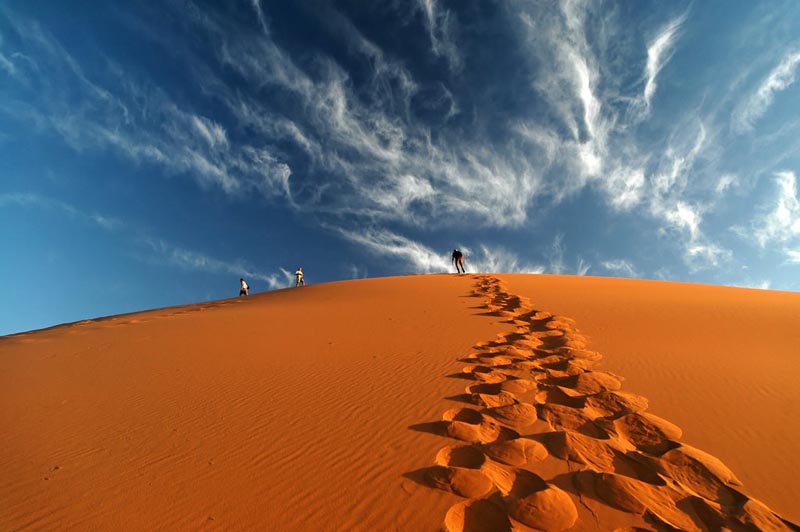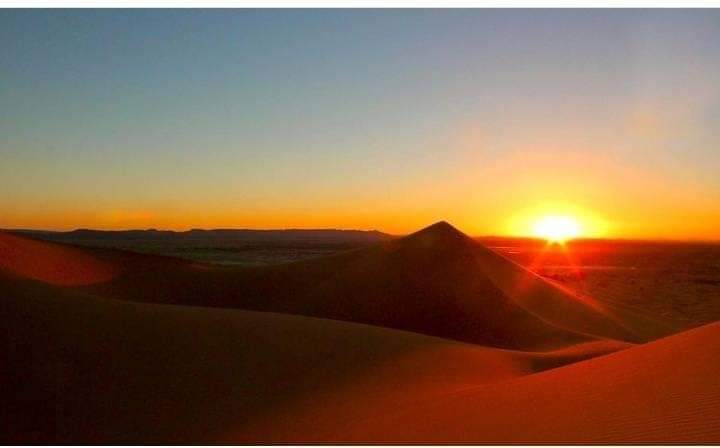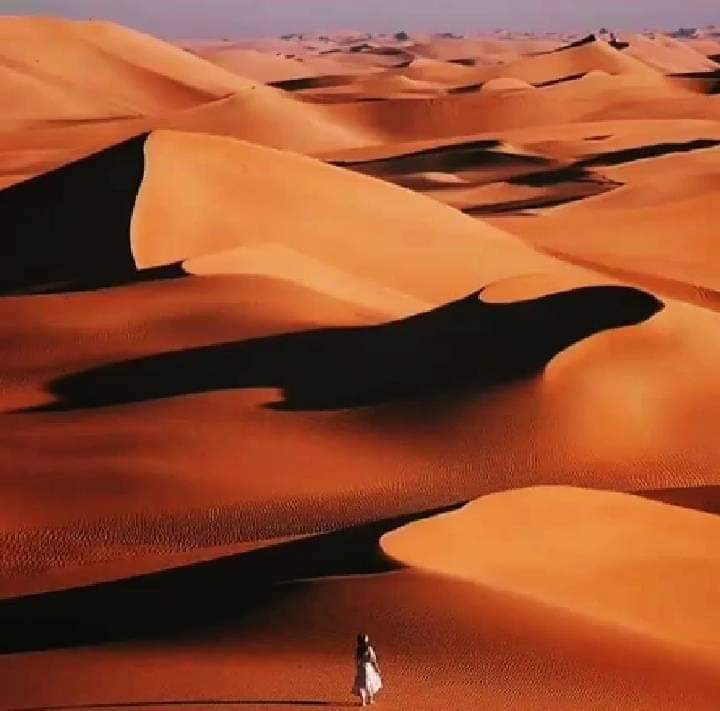
A few kilometres south of Merzouga, along the edge of the Erg Chebbi dunes, the small village of Khamlia offers one of the most memorable cultural encounters in the Moroccan Sahara. Here, in a simple house with carpets on the floor and mint tea on the table, musicians play the hypnotic rhythms of Gnawa music — a tradition with roots that reach across the Sahara to West Africa.
This guide explains who the people of Khamlia are, what Gnawa music is, what a visit looks like in practice, and how to visit respectfully as part of a desert tour.
What is Khamlia village?
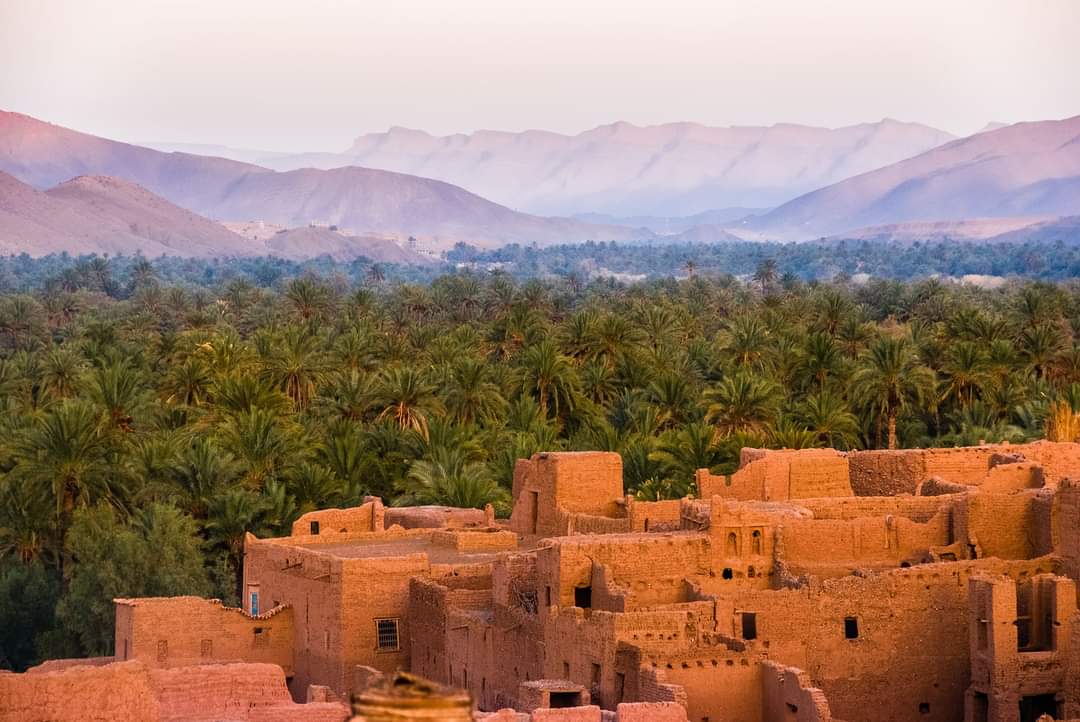
Khamlia is a small desert village in the Tafilalet region of south-eastern Morocco, about 7 km south of Merzouga on the road that runs along the western side of Erg Chebbi. Its houses are built of earth and stone, surrounded by small gardens irrigated from wells. What makes Khamlia unique is its community: many inhabitants are descendants of people from sub-Saharan Africa — from regions of present-day Mali, Sudan and neighbouring areas — who came north along the ancient trans-Saharan routes, many of them historically by force.
Over generations, the community preserved a musical and spiritual tradition known as Gnawa, blending West African rhythms with Moroccan and Islamic influences. Khamlia has become one of the best-known places in the south to hear it performed.
What is Gnawa music?
Gnawa (also spelled Gnaoua) refers both to a community and its music, which combines ritual, healing and celebration. In 2019 Gnawa was inscribed on UNESCO's Representative List of the Intangible Cultural Heritage of Humanity. You can read an overview in the Gnawa music article on Wikipedia.
The instruments you will hear in Khamlia usually include:
- Guembri (or sintir) — a three-stringed bass lute with a camel-skin body, played by the master musician (maâlem).
- Qraqeb — large iron castanets that create the distinctive metallic, trance-like rhythm.
- Tbel — a large drum played with sticks.
- Voices and hand-clapping — call-and-response chants between the lead singer and the group.
The music is repetitive and builds gradually; musicians often dance in circles, spinning and leaping as the rhythm accelerates. Traditionally, Gnawa ceremonies (lila) last all night and have a spiritual and healing purpose. What visitors hear in Khamlia is a shorter performance, but it keeps the essential sound and energy.
What happens during a visit to Khamlia?
- Arrive by 4x4 or car from Merzouga or Hassilabied — often as part of a tour around the Erg Chebbi dunes.
- Enter the music house, take off your shoes and sit on the carpets or cushions.
- Enjoy mint tea offered by your hosts.
- Listen to the performance, usually 3–5 songs lasting 20–40 minutes in total. You may be invited to dance or try the qraqeb.
- Make a contribution — there is usually no fixed ticket; visitors leave a donation or buy a CD or small instrument.
- Walk around the village if time allows, respecting residents' privacy.
How do you get to Khamlia?
| From | Approx. distance | Approx. time | How |
|---|---|---|---|
| Merzouga | 7 km | 10–15 min | Car or 4x4 |
| Hassilabied | 12–13 km | 15–20 min | Car or 4x4 |
| Rissani | about 45 km | 45 min | Car |
| Marrakech | about 560 km | 2–3 days as part of a tour | Desert tour |
Most visitors include Khamlia during a half-day 4x4 excursion around the dunes on the morning after their desert camp night, or on arrival day before the camel ride. It fits naturally into the 3-day Marrakech to Merzouga tour and the 3-day Fes to Merzouga desert tour when time allows. Ask us to include it via our tour request form.
How much does a Khamlia music visit cost?
There is generally no fixed admission. Visitors leave a contribution — as an indication, many give around 50–100 dirhams per person, or buy a CD. Treat it as fair payment for a live performance and hospitality rather than a tip. If you visit with a private tour, your driver can explain local customs.
Tips for a respectful visit
- Ask before taking photos or filming the musicians; most are happy to be photographed during the performance, but check first.
- Dress modestly when walking through the village (shoulders and knees covered).
- Do not photograph residents, especially women and children, without permission.
- Join in if invited to dance — it is part of the joy — but do not feel obliged.
- Buy directly from the musicians if you want a CD or instrument; it supports the community.
Understanding the history behind the music
The story of Khamlia is tied to the long history of trans-Saharan trade. For centuries, caravans crossed the desert between West Africa and Moroccan oasis towns such as Sijilmassa, near today's Rissani, carrying gold, salt, textiles — and also enslaved people. Their descendants formed communities across Morocco, and Gnawa brotherhoods developed as a way to preserve identity, spirituality and memory through music and ritual.
Many Gnawa songs invoke saints and spirits, and lyrics often refer to exile, longing and healing. Even if you do not understand the words, knowing this background changes how you listen. The musicians in Khamlia are usually happy to explain the meaning of a song or the role of an instrument if you ask after the performance. Today the village also lives from small-scale farming and tourism, and visitors' contributions help support families and keep the music alive for younger generations.
Combining Khamlia with other sights around Erg Chebbi
A 4x4 loop around the dunes typically combines Khamlia with visits to nomad families, old lead and barite mining areas, the seasonal lake of Dayet Srji (sometimes holding water and flamingos after rains), fossil sites and viewpoints over the erg. North of Merzouga, the market town of Rissani adds another layer of local culture — see our Rissani market guide. For the dunes themselves, our Erg Chebbi guide covers the essentials.
Gnawa music beyond Khamlia
If the music captures you, Morocco offers more. The coastal city of Essaouira hosts a well-known annual Gnawa and world music festival, usually in early summer, and Gnawa musicians perform regularly in Marrakech's Jemaa el-Fna square. Visiting Khamlia, however, lets you hear the music in an intimate setting within the community that has carried it for generations. If you continue your trip west, our 5-day tour from Marrakech also passes through the culture-rich valleys of the south.
Key takeaways
- Khamlia is a village about 7 km south of Merzouga, home to a community with sub-Saharan roots.
- It is known for live Gnawa music performed with guembri, qraqeb and drums.
- Visits last around 30–60 minutes, with tea and a performance; pay by donation or buy a CD.
- Combine it with a 4x4 tour around Erg Chebbi and a visit to Rissani.