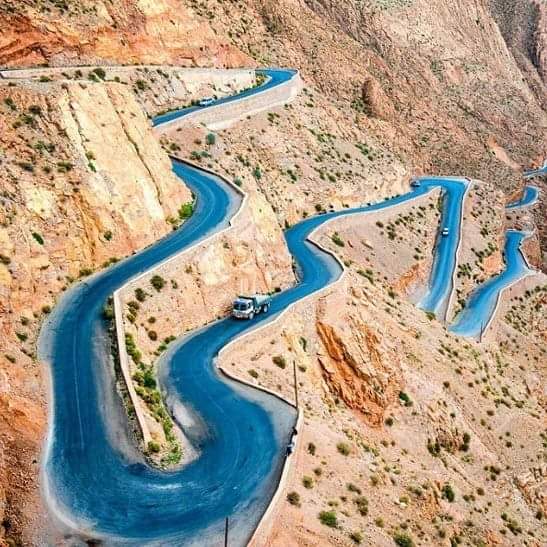
The Dades Valley is where many desert travellers spend their first night out of Marrakech — and where many wish they had planned a second. Between Boumalne Dades and the mountain village of Msemrir, the road climbs past rose-coloured cliffs, rock formations that look like melted wax and kasbahs clinging to the valley walls, before twisting up a set of hairpin bends that has become one of Morocco's most photographed roads.
This guide covers the Dades Gorge in practice: what to see, how to drive or hike it, the best time of year, and how it fits into a Sahara tour.
What is the Dades Gorge?
The Dades Gorge (Gorges du Dadès) is a series of canyons and valleys cut by the Dades River through the southern slopes of the High Atlas, north of the town of Boumalne Dades. Unlike the single slot canyon of Todra, the Dades is a long, winding valley around 25–30 km of which is easily driveable, alternating wide sections of fields and walnut trees with narrow passages between red cliffs. The Dadès Gorges entry on Wikipedia gives a short geographic overview.
The wider "Dades Valley" also refers to the oasis corridor along the N10 between Skoura, Kelaat M'Gouna and Boumalne — the heart of the "road of a thousand kasbahs".
Highlights of the Dades Gorge
- The "Monkey Fingers" formations — rounded, ribbed rock outcrops that look like fingers or brains, carved by erosion. A short walk among them is possible with a local guide.
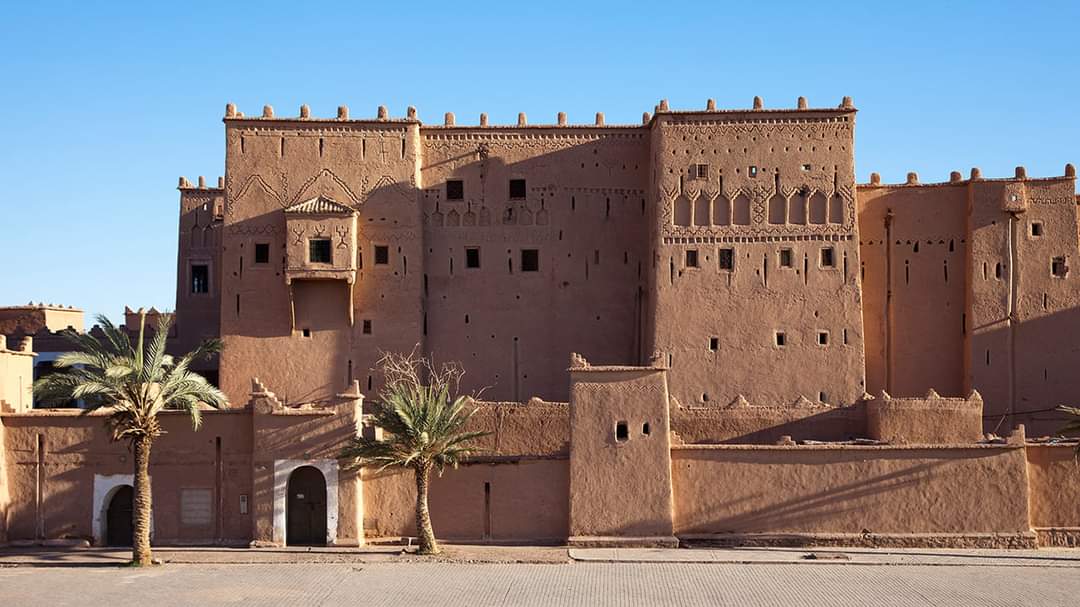
- Kasbahs and ksour — earthen fortified houses lining the valley, some restored as guesthouses.
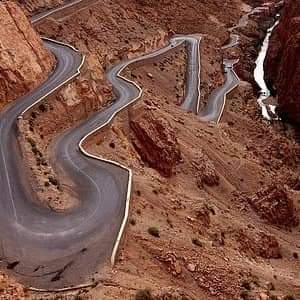
- The Tissdrine switchbacks — a tight series of hairpin bends roughly 25–30 km from Boumalne, best viewed from the café terraces at the top.
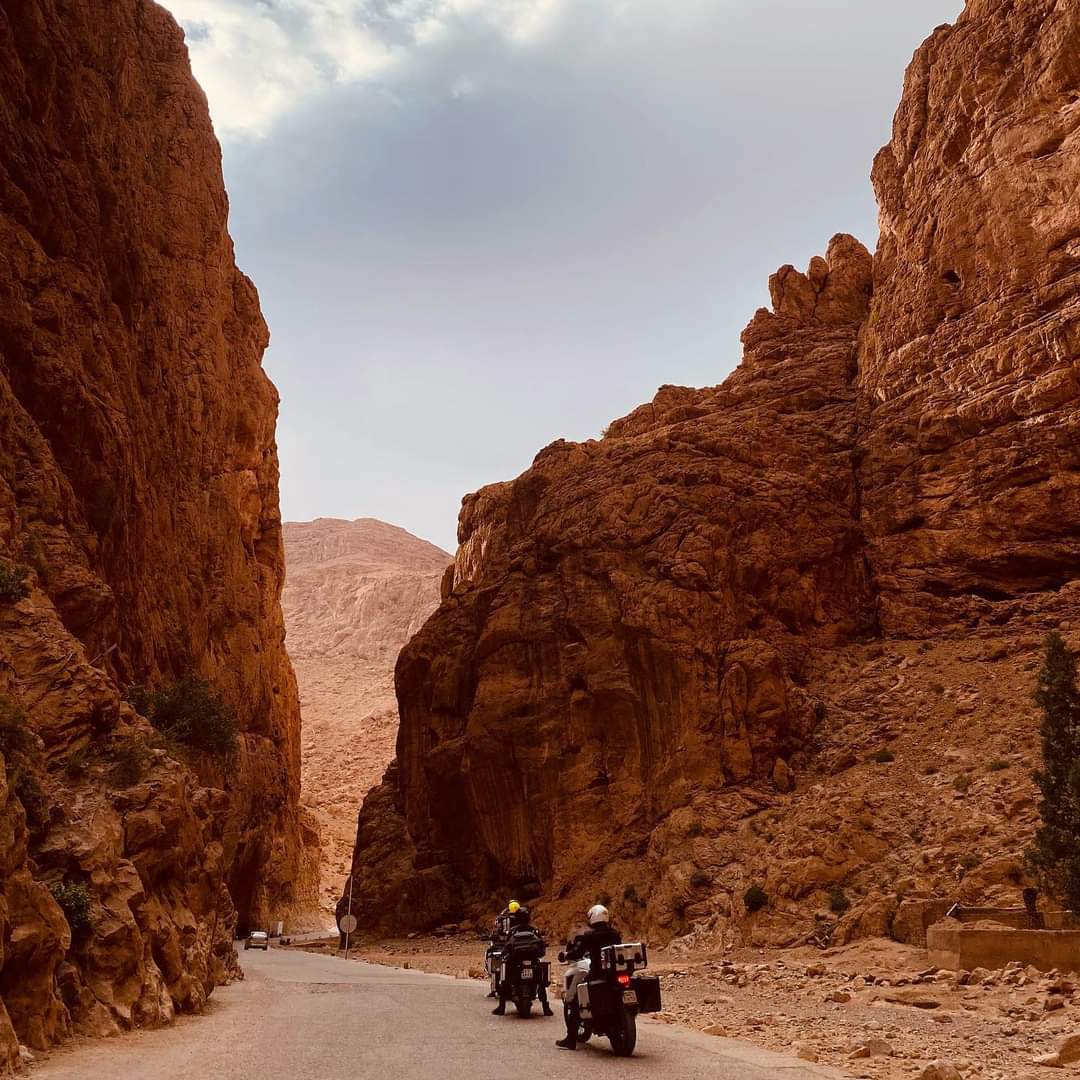
- The narrows — a short stretch where the road squeezes between vertical walls beside the river.
- Kelaat M'Gouna, the "Valley of Roses" — south-west of Boumalne, famous for Damask roses and a rose festival held around May.
How do you get to the Dades Gorge?
| From | To Boumalne Dades | Approx. drive | Notes |
|---|---|---|---|
| Marrakech | about 310 km | 6–7 h | Via Tizi n'Tichka and Ouarzazate |
| Ouarzazate | about 115 km | 2 h | Via Skoura and Kelaat M'Gouna |
| Tinghir (Todra) | about 55 km | 1 h | Easy to combine both gorges |
| Merzouga | about 260 km | 4–4.5 h | Return leg of desert tours |
From Boumalne, the gorge road (R704) heads north toward Msemrir. It is paved as far as the Tissdrine switchbacks and beyond, though narrow in places. Because of the drive time from Marrakech, the Dades is the classic first-night stop on the Marrakech to Merzouga 3-day tour and on the 3-day travel from Marrakech.
How to explore the Dades Gorge step by step
- Start at Boumalne Dades and take the R704 north into the gorge.
- Stop at the Monkey Fingers area (around 15 km in) to photograph or walk among the formations.
- Continue through the narrows beside the river.
- Climb the switchbacks at Tissdrine and stop at the top for the view and a mint tea.
- Return the same way, or continue on a longer mountain loop with a 4x4 and driver if conditions allow.
Hiking in the Dades Gorge
The Dades is excellent walking country. Popular options include a 2–3 hour loop through the Monkey Fingers and side canyons, walks along the river past villages and walnut orchards, and longer day hikes toward the high plateaus. Trails are unsigned and canyons can be confusing, so a local guide is strongly recommended — guesthouses in the gorge can usually arrange one. Spring (April–May) is especially beautiful, when the fields are green and the almond and rose blossoms are out.
When is the best time to visit the Dades Gorge?
Spring and autumn are ideal: mild days, clear light and comfortable hiking temperatures. Summer is warm but pleasant compared with the desert; the valley sits at around 1,500 m altitude. Winter (December–February) is cold, with nights below freezing and occasional snow at higher points — guesthouses provide heating and blankets, but pack warm layers. After heavy storms, landslides can briefly close sections of the road.
Where to stay in the Dades
Accommodation ranges from simple family guesthouses to restored kasbah hotels with valley views. Many sit right in the gorge, a few kilometres from Boumalne, so you can wake to the cliffs at sunrise. Approximate prices for a double room with half-board range from €35–€60 in a simple guesthouse to €80–€150 or more in a boutique kasbah (2026, indicative only).
The road of a thousand kasbahs around the Dades
Before you even enter the gorge, the drive along the Dades Valley is a highlight in itself. Between Ouarzazate and Boumalne, the N10 passes Skoura — a vast palm grove dotted with kasbahs such as the well-known Amridil — and Kelaat M'Gouna, where roadside shops sell rose water, rose soap and dried rose buds. In spring the hedgerows of Damask roses bloom pink across the valley. These stops add little time to the journey and give a real sense of the region's earthen architecture and agricultural life.
A kasbah is a fortified family residence, usually with corner towers, built from rammed earth and mud bricks. A ksar (plural ksour) is a whole fortified village. Both are typical of the pre-Saharan valleys, and many are now being restored as guesthouses and small museums. Staying in one is a memorable alternative to a standard hotel.
Driving the Dades yourself: what to know
- Fuel up in Boumalne; stations are scarce in the upper gorge.
- Expect slow traffic: shepherds, donkeys, minibuses and cyclists share the road.
- Do not stop on the hairpin bends themselves — park at the cafés at the top.
- Beyond Msemrir the roads become mountain pistes suitable only for 4x4s with local knowledge.
Dades Gorge vs Todra Gorge
Photographers should plan for light: the switchbacks look best from the top in the late afternoon, when the low sun picks out every curve of the road, while the Monkey Fingers glow warm red in the early morning. Overnighting inside the gorge lets you catch both without rushing.
Dades offers variety — rock formations, kasbahs, hairpin roads, hikes — spread along a valley. Todra offers one concentrated, jaw-dropping canyon. With an hour between them, most travellers see both. Our Todra Gorge guide explains how to plan that visit.
Key takeaways
- The Dades Gorge runs north from Boumalne Dades through the High Atlas; the main sights lie within 30 km.
- Don't miss the Monkey Fingers formations and the Tissdrine switchbacks.
- It is the classic overnight stop between Marrakech and the Sahara.
- Spring and autumn are best; winter nights are cold.
- For more time in the valleys, consider the 7-day tour from Ouarzazate or contact us via our contact page.