For most travellers, the camel trek is the moment the Sahara becomes real: the slow sway of the animal, the silence of the dunes and the light turning gold around you. It is also an activity many people do for the very first time without knowing what to expect. A few simple tips make the difference between a magical ride and an uncomfortable one.
This guide gathers practical camel trekking advice for Morocco — from mounting and posture to clothing, duration, animal welfare and what to ask before you book.
What is a camel trek in the Moroccan Sahara?
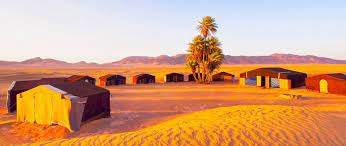
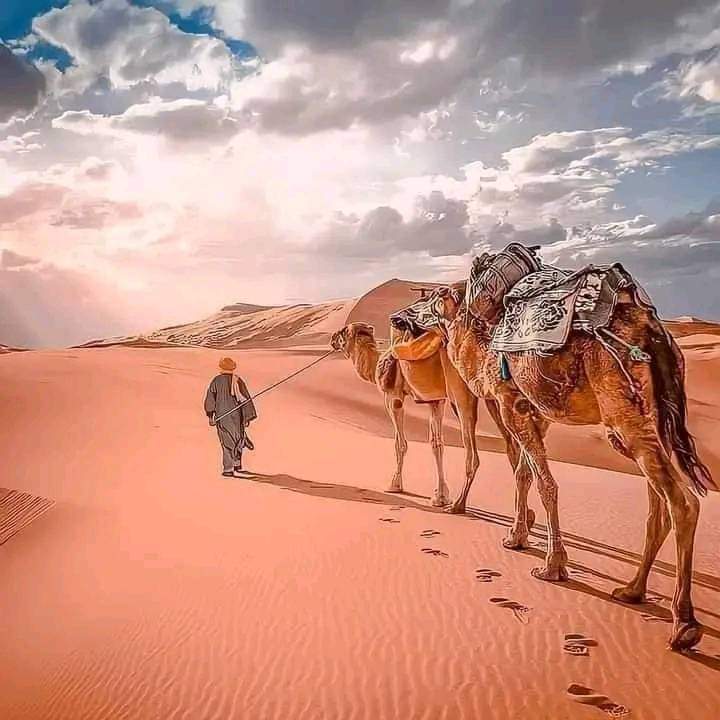
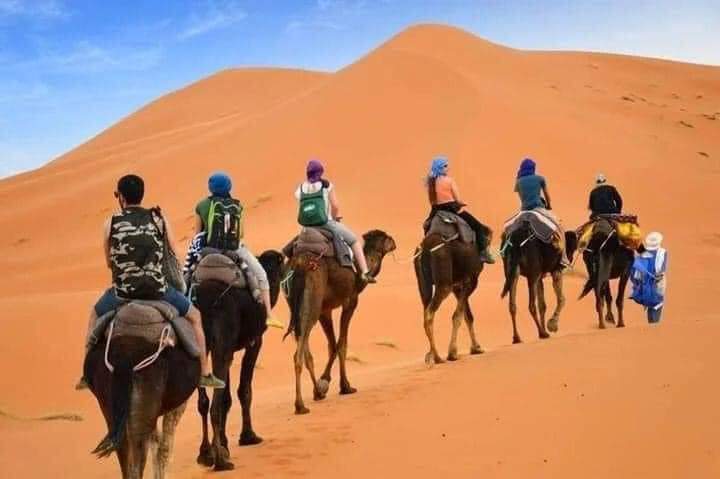
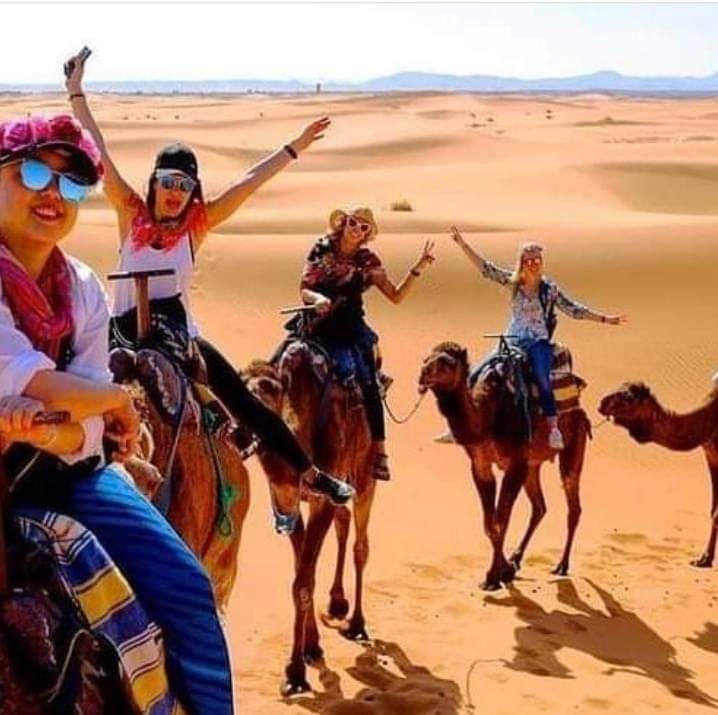
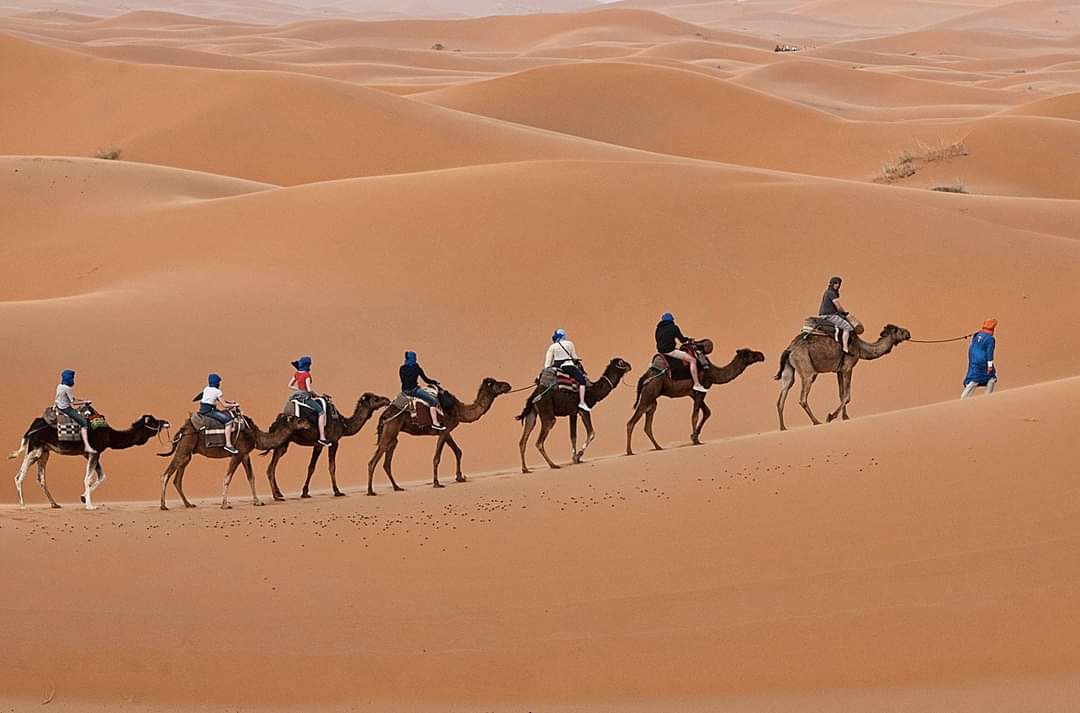
A camel trek in Morocco usually means riding a dromedary (the one-humped camel) through the dunes with a local camel handler walking in front and leading the caravan by rope. On standard desert tours the ride is short — typically 1 to 2 hours — connecting the edge of the erg to an overnight camp. Longer multi-day treks exist, especially around Erg Chigaga and the Drâa Valley, where you alternate walking and riding.
The dromedary has carried goods across the Sahara for centuries and remains part of nomadic life in the south. The dromedary entry on Wikipedia explains why these animals are so well suited to desert travel.
Where can you go camel trekking in Morocco?
| Area | Landscape | Typical ride | Matching tour |
|---|---|---|---|
| Merzouga / Erg Chebbi | High orange dunes | 1–1.5 h to camp, sunrise ride back | Marrakech to Merzouga in 3 days |
| Zagora | Smaller dunes, palm groves, rocky desert | 45 min–1.5 h | 2-day Zagora desert tour |
| Erg Chigaga | Wide, remote dunes | 1–2 h, longer treks possible | Erg Chigaga tour from Ouarzazate |
Merzouga offers the most dramatic dune scenery, Zagora is the closest to Marrakech, and Chigaga is the wildest. Our Erg Chebbi guide and Erg Chigaga guide describe each in depth.
How to mount, ride and dismount a camel
The trickiest moments of any camel trek are getting on and off. Camels kneel to be mounted, then rise in two jerky movements: back legs first, then front legs. Follow these steps:
- Approach from the side while the camel is kneeling and the handler holds the rope.
- Swing your leg over the saddle like mounting a bicycle and sit squarely behind the front handle.
- Hold the handle with both hands and lean back as the camel lifts its back legs — this is when people tip forward.
- Lean slightly forward as the front legs straighten.
- During the ride, relax your hips and move with the rhythm instead of gripping with your thighs.
- To dismount, reverse the process: lean back as the front legs fold, then forward as the back legs fold.
What should you wear for a camel ride?
- Long, loose trousers — shorts let the saddle rub your inner legs.
- A scarf or cheche to protect your head and face from sun and blowing sand. Handlers will usually show you how to tie it.
- Closed shoes or sandals with straps; you may walk on hot sand.
- Sunglasses with a strap and sunscreen.
- A warm layer in your daypack — the temperature drops fast after sunset.
- A small cross-body bag for your phone; avoid holding it loosely while the camel stands up.
Is camel trekking comfortable? Honest expectations
For most people a 1-hour ride is pleasant and easy. After 90 minutes you will likely feel it in your thighs and lower back, especially if you are not used to riding. On longer treks it is completely normal to walk alongside the camel for part of the way — the handler will be happy to let you. If you have back problems, are pregnant, or have limited mobility, mention it when booking; a 4x4 transfer to camp is often possible instead.
Many operators apply a practical weight guideline (often around 100–110 kg) for the animal's welfare. If this concerns you, ask in advance; it is a reasonable question and a good operator will answer honestly.
Camel welfare: how to choose a responsible ride
A responsible camel trek is good for the animals, the handlers and you. Look for these signs:
- Camels look well fed, with no open wounds under the saddle.
- Rides are at a walking pace — no racing camels for photos.
- Animals rest in the shade during the hottest part of the day.
- One rider per camel (small children may share with a parent).
- Handlers are local and treat the camels calmly.
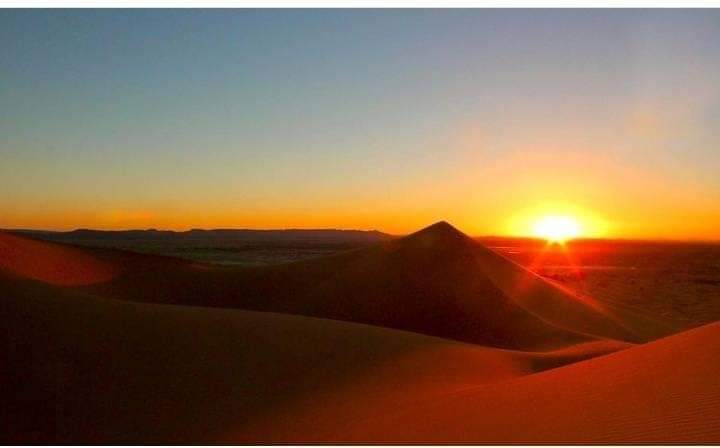
Sunset and sunrise rides are not only more beautiful; they also spare the animals the midday heat.
Best time of day and year for camel trekking
Late afternoon to sunset is the classic time, followed by a sunrise ride back out. In summer (June–August) avoid riding between roughly 11 am and 5 pm. October–April offers the most comfortable temperatures, though winter evenings are cold. See visiting Merzouga in winter for clothing advice.
Photography tips on a camel
- Use a wrist strap; dropping a phone into soft sand from two metres is common.
- Shoot the shadow of the caravan on the dunes during the last hour of light.
- Ask the handler to stop on a ridge for photos rather than shooting while bouncing.
- Protect lenses from sand with a plastic bag between shots.
What to ask before booking a camel trek
A few questions sent before you book will tell you a lot about the quality of the experience:
- How long is the ride in each direction? Anything from 45 minutes to 2 hours is normal; know which you are getting.
- Is the ride at sunset and sunrise? These are the coolest and most beautiful times.
- Can luggage go by 4x4? Camels should not carry your suitcase; most camps transfer bags separately.
- Is there an alternative for non-riders? A 4x4 drop-off or walk with the caravan should be possible.
- What camp will we stay in? The camel ride is only half the night; the camp standard matters just as much.
Tipping is customary but not compulsory: camel handlers often rely on tips, and a modest amount in dirhams at the end of the ride is appreciated. Hand it directly to your handler rather than leaving it with the camp.
Key takeaways
- Most Moroccan camel treks last 1–2 hours, linking the edge of the dunes to a desert camp.
- Lean back as the camel stands, relax your hips while riding, and wear long trousers.
- Choose operators who ride at sunset/sunrise and treat animals well.
- Merzouga, Zagora and Erg Chigaga are the three main areas; pick based on time and landscape.
- For a full trip with a camel ride included, look at our 3-day tour from Marrakech.